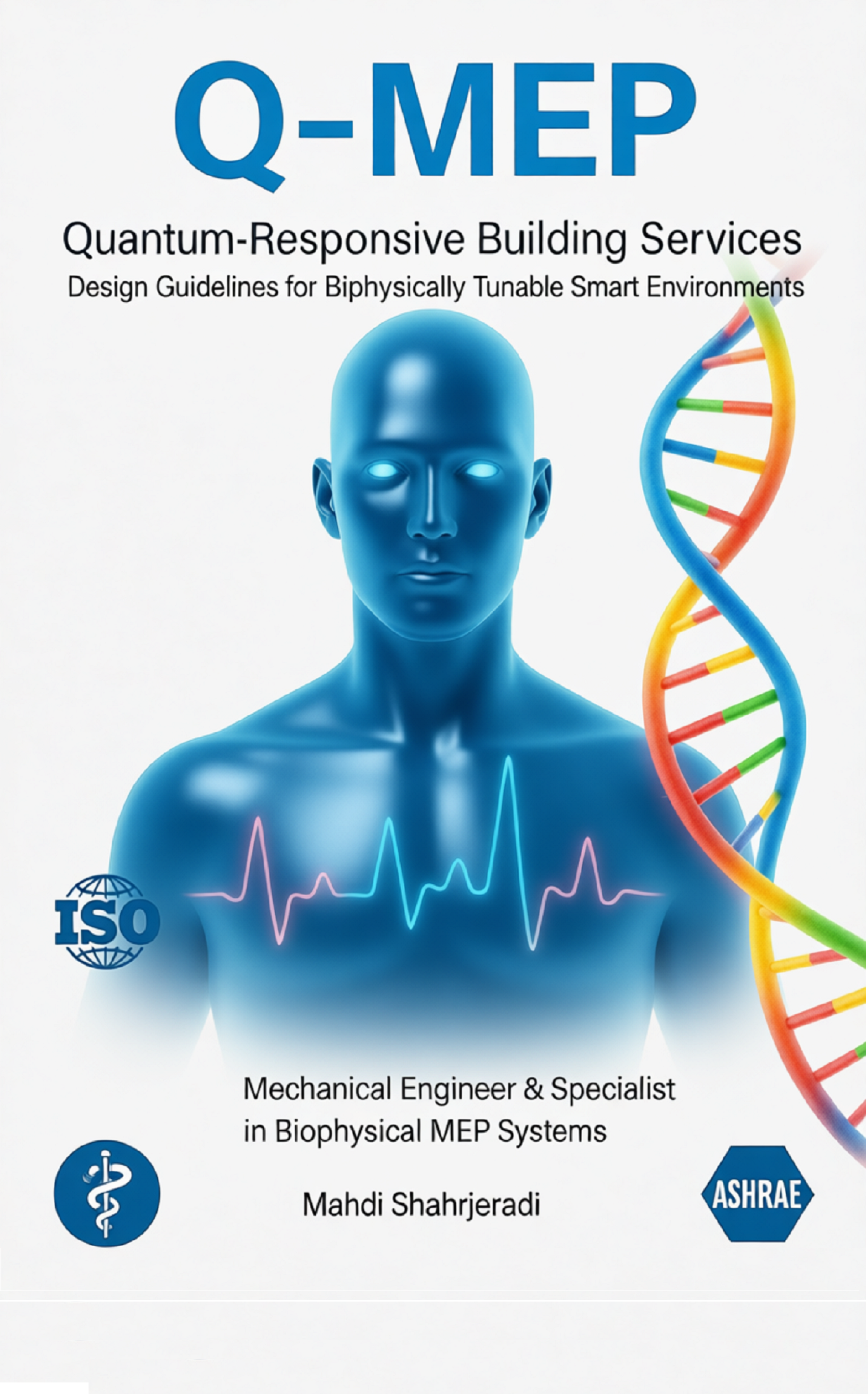
Q-MEP : Quantum-Responsive Building Services
Design Guidelines for Biophysically Tunable Smart Environments
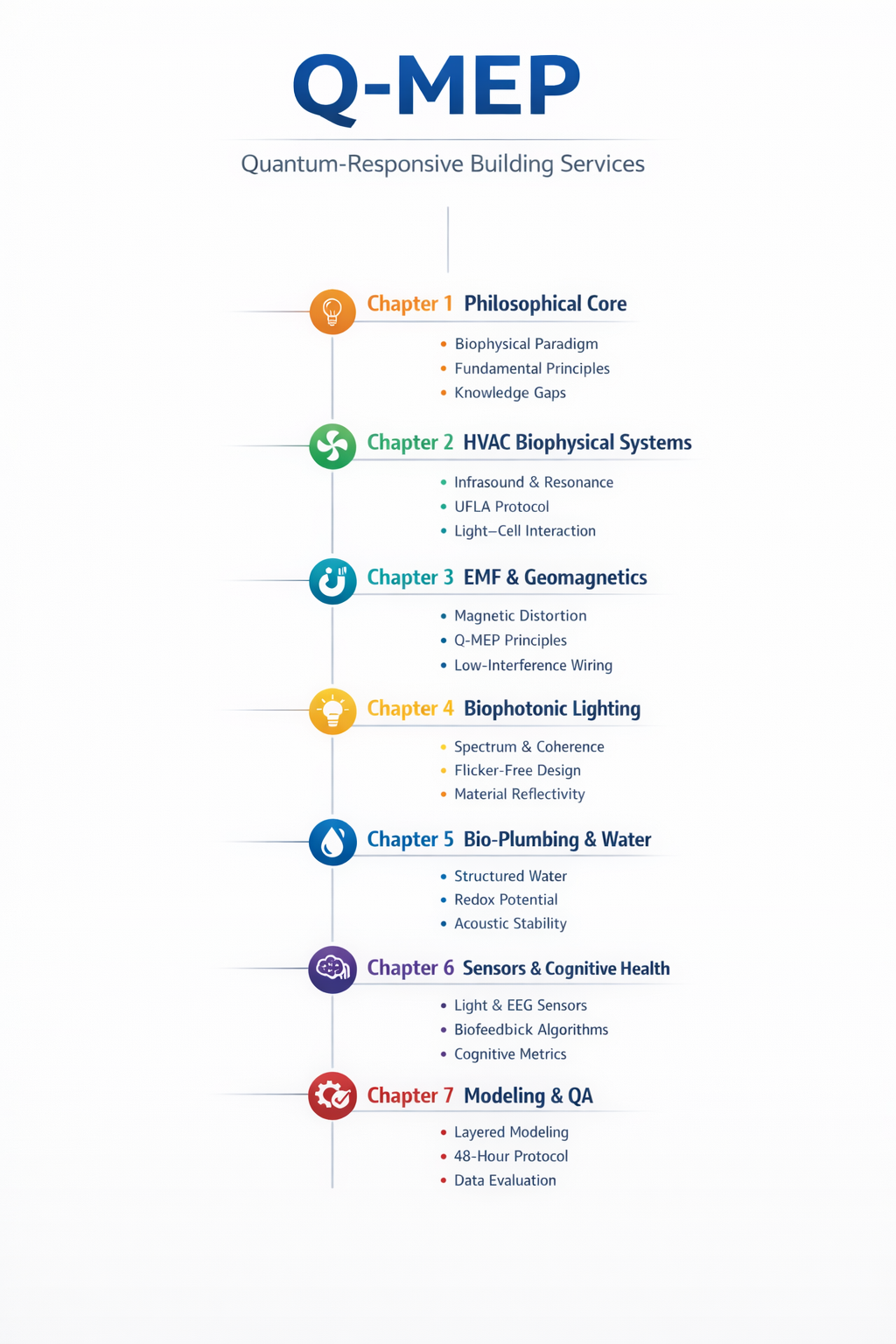
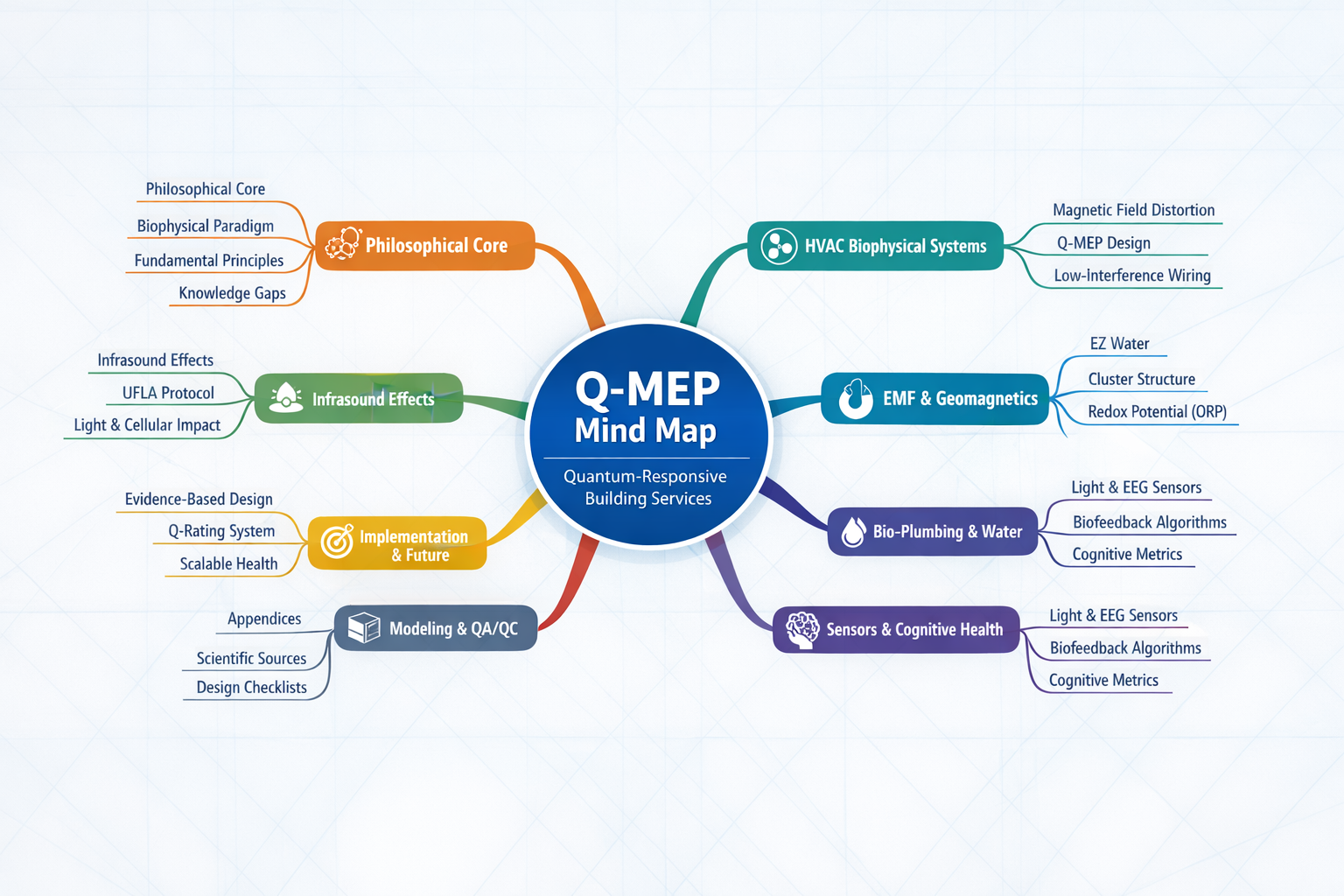
Q‑MEP Book Structure│
├── Chapter 1 – Philosophical Core
│ ├── Biophysical Paradigm
│ ├── Fundamental Principles
│ └── Knowledge Gaps in Current Standards
│
├── Chapter 2 – HVAC Biophysical Systems
│ ├── Infrasound & Human Resonance
│ ├── UFLA Protocol
│ └── Light–Cell Interaction
│
├── Chapter 3 – EMF & Geomagnetics
│ ├── Magnetic Field Distortion
│ ├── Q‑MEP Design Principles
│ └── Low‑Interference Wiring
│
├── Chapter 4 – Biophotonic Lighting
│ ├── Spectrum & Coherence
│ ├── Flicker‑Free Design
│ └── Material Reflectivity
│
├── Chapter 5 – Bio‑Plumbing & Water Systems
│ ├── Structured Water (EZ Phase)
│ ├── Redox Potential (ORP)
│ └── Acoustic Stability
│
├── Chapter 6 – Sensors & Cognitive Health
│ ├── Light & EEG Sensors
│ ├── Biofeedback Algorithms
│ └── Cognitive Metrics
│
└── Chapter 7 – Modeling & Quality Assurance
├── Q‑MEP Layered Modeling
├── 48‑Hour Protocol
└── Evaluation & Data Integration
Why “Comfort” Is Not Enough
A New Engineering Perspective on Human‑Centered Building Design
Introduction
For decades, the primary objective of building design has been summarized in one word: comfort. Standards such as ASHRAE, ISO, and WELL have shaped the modern built environment by defining acceptable ranges for temperature, humidity, ventilation, air quality, and illumination.
Yet a fundamental question remains unanswered:
If a space meets every conventional comfort standard, why do so many occupants still experience fatigue, reduced focus, sleep disruption, irritability, or cognitive decline?
This question is the starting point of the Q‑MEP framework.
Foundational Questions Q‑MEP Puts on the Table
Does the human body respond only to temperature and light?
Or does it also respond to frequencies, electromagnetic fields, spectral composition, flicker, polarization, acoustic pressure, and even the structural properties of water?
Is comfort a sufficient indicator of long‑term health?
Or should we treat biophysical health as a primary engineering target?
Do current standards capture all relevant environmental variables?
Or is a significant portion of the physical environment still unmeasured and uncontrolled?
Q‑MEP answers these questions with scientific clarity, engineering precision, and practical protocols.
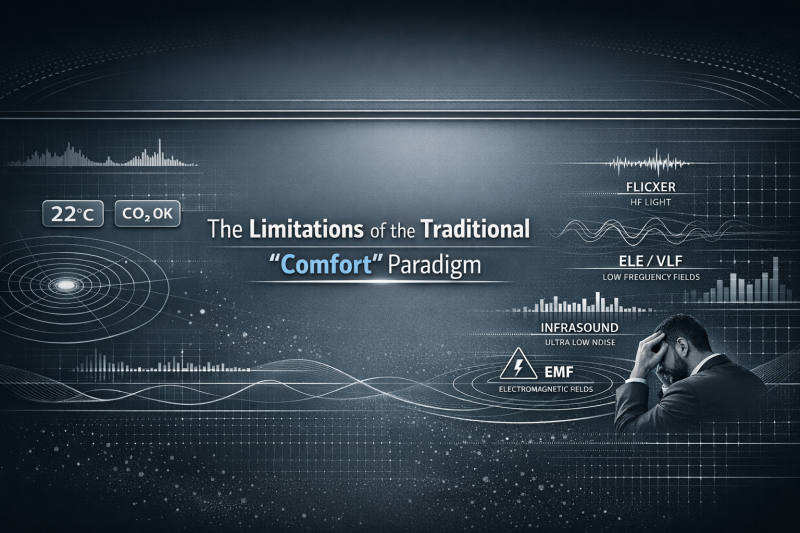
The Limitations of the Traditional “Comfort” Paradigm
Comfort is a subjective sensation, not a health metric
A person may feel comfortable in a room while the environment simultaneously exposes them to:
-
hidden flicker in LED lighting
-
elevated ELF fields from electrical systems
-
infrasound generated by mechanical equipment
-
geomagnetic field distortion caused by building materials
These factors are not consciously perceived,
but they can influence sleep quality, cognitive performance, mood stability, and physiological stress.
Conventional standards measure only a fraction of what matters
PMV, CCT, lux, ACH, and temperature are important,
but they represent only a small portion of the environmental variables that affect human biology.
Current standards do not fully address:
-
spectral distribution and biophotonic effects
-
high‑frequency flicker
-
ELF and EMF exposure
-
infrasound below 20 Hz
-
geomagnetic field distortion
-
water structure and ORP
-
cognitive and neurophysiological responses
Q‑MEP integrates these missing variables into a unified engineering framework.
The human body is a biophysical system
Human physiology responds not only to perceptible stimuli,
but also to subtle physical information in the environment.
Light, fields, and frequencies are not merely energy sources;
they are informational inputs that influence:
-
neural rhythms
-
hormonal cycles
-
cellular signaling
-
cardiovascular variability
-
cognitive performance
This is the foundation of Q‑MEP.
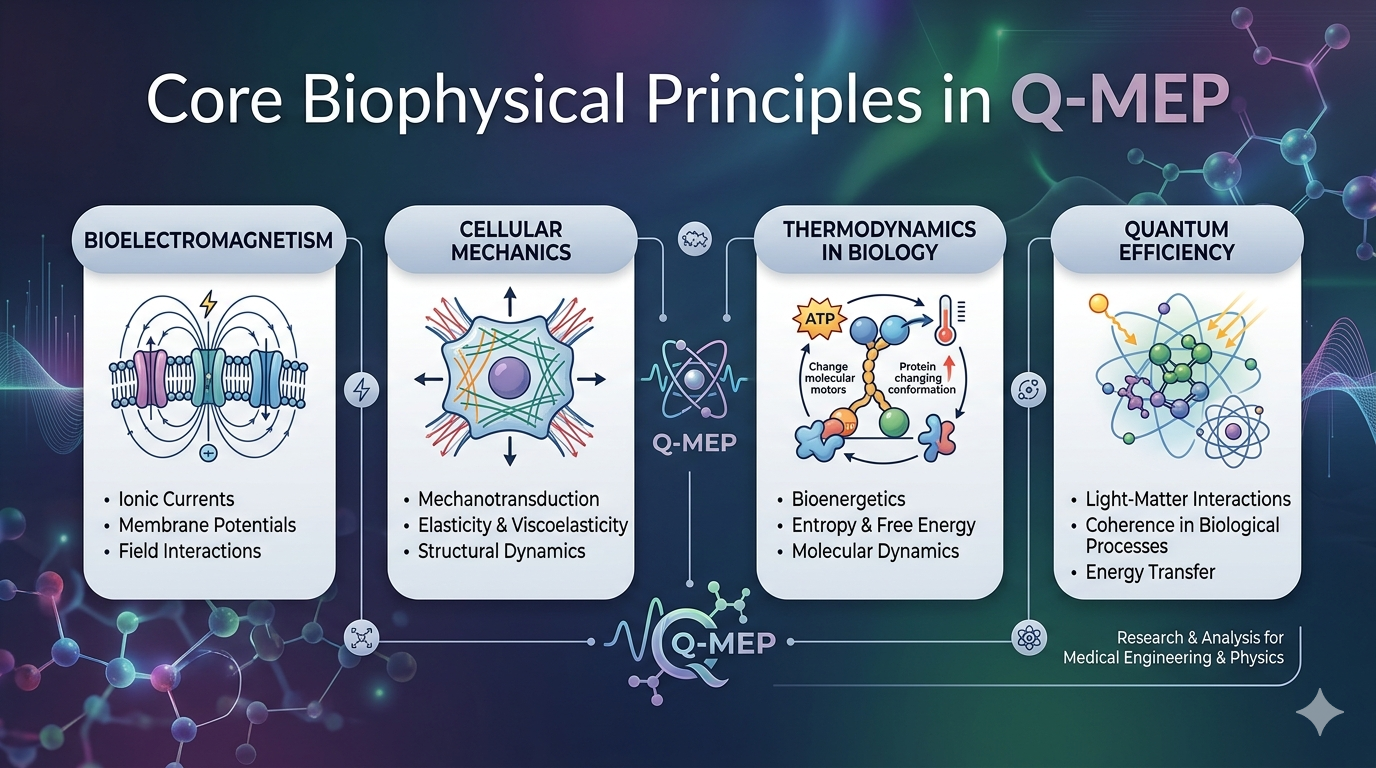
Core Biophysical Principles in Q‑MEP
Infrasound and ELF fields originate from:
-
fans and blowers
-
compressors
-
pumps
-
transformers and electrical panels
-
electronic equipment
Q‑MEP provides engineering methods for:
-
precise frequency measurement
-
spectral analysis
-
resonance identification
-
UFLA‑based mitigation
-
vibration pathway redesign
-
low‑noise equipment selection
In Q‑MEP, light is treated as a biological signal, not just illumination.
The book explains:
-
how spectral composition affects hormonal regulation
-
how flicker contributes to cognitive fatigue
-
how polarization and coherence influence cellular processes
-
why conventional LED lighting can degrade mental performance
-
how to engineer lighting for focus, calmness, or cognitive enhancement
The Earth’s magnetic field becomes distorted inside buildings.
This distortion can:
-
disrupt neural rhythms
-
impair sleep quality
-
increase physiological stress
Q‑MEP provides methods for:
-
magnetic field mapping
-
interference source identification
-
shielding strategies
-
active field compensation
-
low‑interference wiring design
-
Water and Plumbing Systems
Water is a biologically active medium, not just a fluid.
Q‑MEP addresses:
-
molecular water structure
-
oxidation‑reduction potential
-
vibrational effects in piping
-
hydraulic noise
-
biophysical implications of water quality
-
Sensors and Artificial Intelligence
Q‑MEP extends building design into real‑time adaptive systems using:
-
spectral sensors
-
EEG‑based cognitive sensors
-
HRV and GSR monitoring
-
biophysical feedback algorithms
-
dynamic environmental adjustment
This transforms a building into a responsive biophysical ecosystem.
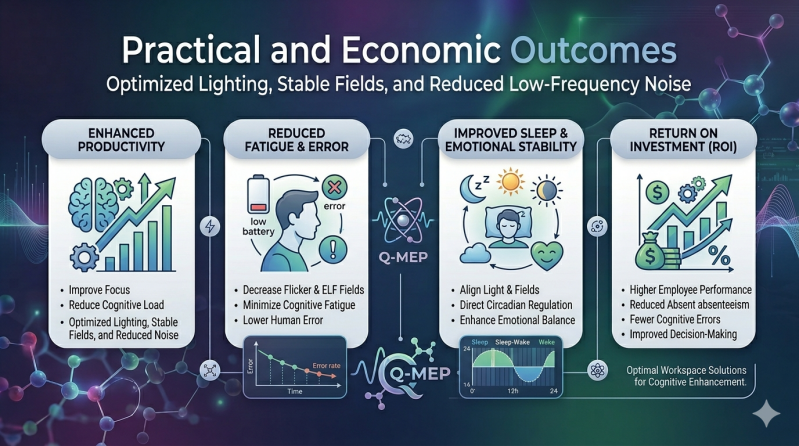
Practical and Economic Outcomes
Enhanced productivity
Optimized lighting, stable fields, and reduced low‑frequency noise
improve focus and reduce cognitive load.
Reduced fatigue and human error
Flicker and ELF fields are major contributors to cognitive fatigue.
Improved sleep and emotional stability
Light and field alignment directly influence circadian regulation.
Return on investment
Organizations benefit from:
-
higher employee performance
-
reduced absenteeism
-
fewer cognitive errors
-
improved decision‑making quality
Q‑MEP is not simply another book on building systems.
It is a new engineering paradigm that reframes the built environment as a biophysical interface with the human body.
In this framework:
-
comfort is necessary but insufficient
-
biophysical health becomes a measurable engineering target
-
light, fields, and frequencies are design variables
-
buildings can actively enhance human performance
For engineers seeking a deeper understanding of next‑generation building design,
Q‑MEP provides the scientific foundation, engineering tools, and practical protocols needed to create environments that truly support human health and cognition.
Create Your Own Website With Webador