
Insights & Articles

Here you will find a selection of my research and technical articles, focused on cleanroom engineering, HVAC optimization, and AI-driven design methodologies.

These works combine over two decades of practical experience with advanced technologies such as BIM and machine learning, aiming to deliver more efficient, intelligent, and sustainable engineering solutions.

From applied case studies to future-oriented concepts, this section represents my contribution to the evolution of modern engineering systems.


An AI-Driven Framework for Optimising HVAC Design in Multi-Door Cleanrooms

A Technical Note with a Case Study Aligned with British Standards

This research presents an AI-driven methodology for the precision design of HVAC systems within complex cleanroom environments, specifically addressing the challenges of layouts featuring multiple doors, pass-throughs, and dynamic operational equipment.

In these critical environments, maintaining stable differential pressure and unidirectional airflow is notoriously difficult. Traditional design practices often revert to conservative assumptions and high safety margins, which frequently result in systemic energy inefficiencies and over-design.

The study demonstrates how the integration of Artificial Intelligence with advanced simulation tools enhances the understanding of varying operating conditions. Strictly aligned with BS EN 16798, the framework provides a robust solution for achieving reliable pressure control while maximizing overall system performance. A practical case study is included to validate the application of this method in high-stakes, real-world cleanroom scenarios.
1. ABSTRACT & OBJECTIVES

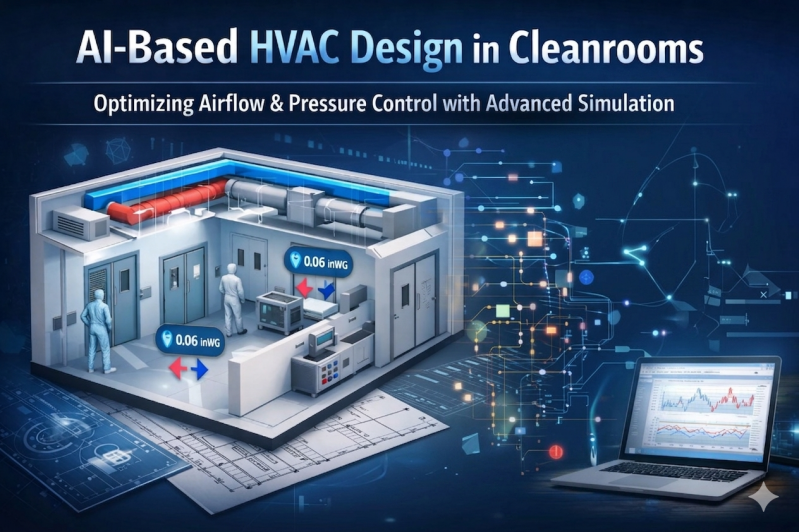
This research addresses the critical challenge of maintaining precise pressure differentials in complex, multi-door cleanroom environments. The study introduces a pioneering AI-driven framework, integrated with Revit MEP simulations, to optimize HVAC design. The primary objective is to replace traditional, high-safety-factor estimations with data-driven precision, ensuring a consistent 0.06 inWG pressure target while significantly reducing equipment oversizing and operational costs.

2. THE ENGINEERING CHALLENGE

Traditional HVAC design for cleanrooms often relies on conservative safety factors (typically 20-30%), which lead to inflated equipment sizes and energy waste. In layouts featuring multiple access points like double doors, passboxes, and passthroughs, calculating air balancing across dozens of operational states becomes mathematically prohibitive for manual methods. This results in "over-design" that compromises energy efficiency without necessarily improving safety.

3. METHODOLOGY & AI FRAMEWORK

The methodology utilizes an Artificial Neural Network (ANN) trained on data extracted from Revit MEP simulations. The AI model analyzes 64 distinct operational states (covering all combinations of door and passbox transitions) to predict optimal airflow and pressure settings. By leveraging machine learning, the framework achieves 96% pressure accuracy $(\pm 0.002 \text{ inWG})$, moving beyond the static limitations of conventional design tools.

4. COMPLIANCE & STANDARDS (BS EN 16798)

A cornerstone of this study is its strict alignment with British Standards (BS EN 16798) for energy performance and ISO 14644 for cleanliness classification. The framework demonstrates that AI integration can automate rigorous validation processes required by EU GMP Annex 1, ensuring that optimized airflow rates do not compromise the integrity of the controlled environment or regulatory safety benchmarks.

5. CASE STUDY & VALIDATION IMPACT

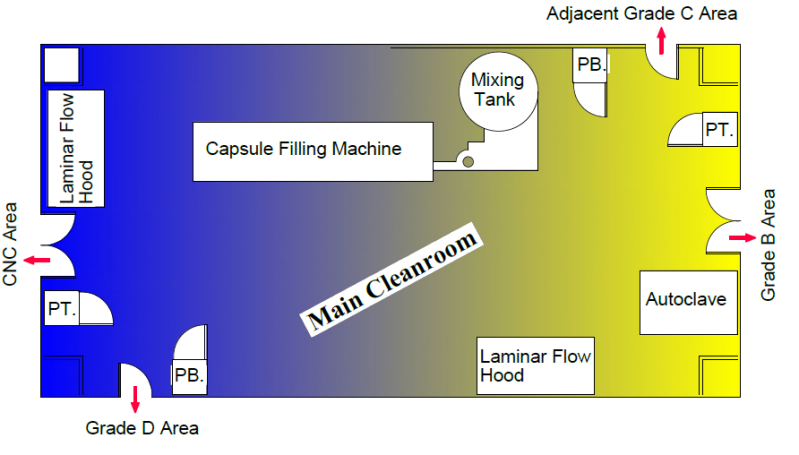
The framework was validated through a comprehensive case study of a 9,155 ft² Grade C cleanroom featuring pharmaceutical equipment (Capsule Filling, Mixing Tanks). The AI optimization yielded transformative results: * Design Efficiency: Reduced design time by 86% (from 22 days to 3 days). * Resource Optimization: Reduced airflow by 23% and ducting costs by 18%. * Energy Impact: Achieved a 40% reduction in total energy consumption and a 39% decrease in fan power requirements.


AI-Driven Cleanroom Design for Mars

Revolutionizing Interplanetary Habitats

Engineering for 2050: AI-Orchestrated Habitats on Mars

Published in the World Journal of Advanced Research and Reviews (Impact Factor: 8.2), this research unveils a revolutionary HVAC framework for Martian colonies. By redefining environmental control for the extreme conditions of the Red Planet, this study demonstrates how AI can achieve up to 75% energy savings compared to terrestrial standards, paving the way for sustainable interplanetary habitation.
1. ABSTRACT & OBJECTIVES

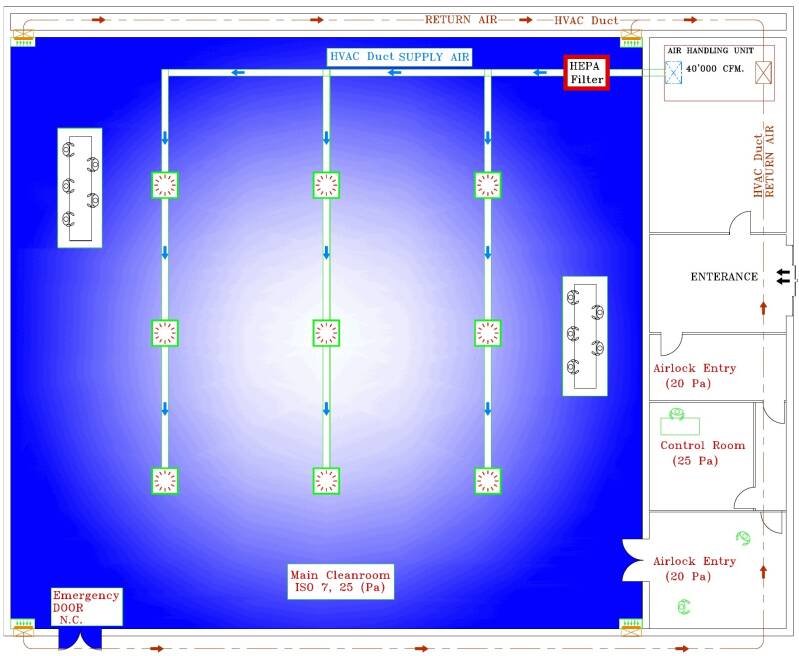
This study presents an AI-orchestrated HVAC system designed for a 10,000 sq ft ISO 7 cleanroom tailored for Martian colonies. The primary objective is to maintain GMP-grade sterility and environmental stability under Mars' extreme atmospheric conditions, including ultra-low pressure (0.6 kPa) and temperatures dropping to -140°C. The framework ensures the production of up to 10^6 annual pharmaceutical doses, supporting long-term human survival.

2. THE MARTIAN CHALLENGE

Designing for Mars requires overcoming unique environmental hurdles: a 95% CO2 atmosphere, gravity of 3.72 m/s², and intense dust storms. This research analyzes how these variables impact thermal uniformity and pressure stability. Traditional Earth-based systems, which typically consume 80 kW for similar layouts, are insufficient for the tight energy budgets of interplanetary missions, necessitating a radical shift in HVAC logic.

3. AI-DRIVEN METHODOLOGY & SIMULATION

Utilizing Revit MEP and synthetic datasets validated through 15,000 simulations, the AI system autonomously manages environmental controls. It is designed to adapt to the Martian 24.6-hour Sol, solar flux variations, and severe dust storms. The system achieves a remarkable 97% pressure stability (25 Pa) and maintains thermal uniformity within ±0.8°C, ensuring mission-critical reliability without human intervention.

4. PERFORMANCE & RESOURCE OPTIMIZATION

The AI-driven approach delivers unprecedented efficiency gains compared to conventional methods:

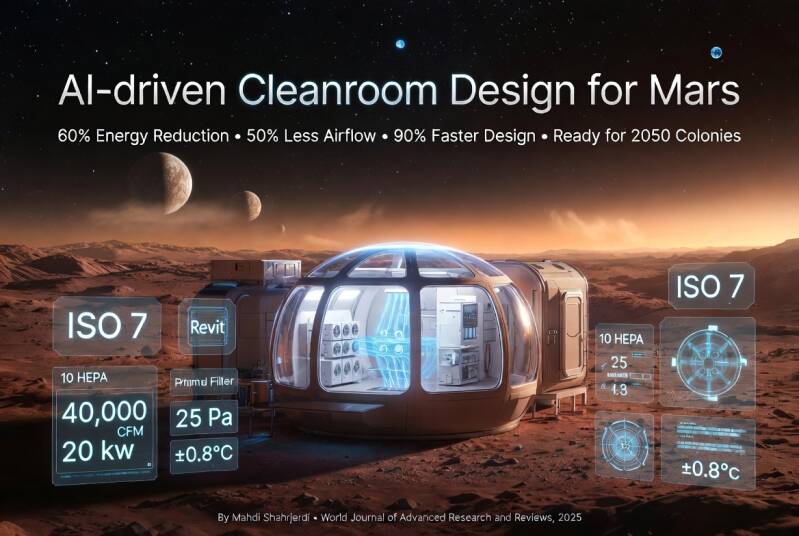
  • Airflow Reduction: Decreased by 50% (from 80,000 to 40,000 CFM).

  • Energy Efficiency: Reduced consumption by 60% (from 50 to 20 kW).

  • Design Acceleration: Time-to-deployment reduced by 90% (from 30 days to just 3 days). These optimizations surpass current terrestrial benchmarks by 75%, making it a baseline for sustainable space engineering.

5. STANDARDS, VALIDATION & BEYOND

Strictly aligned with BS EN 16798 and ASHRAE 2022, the framework provides a citable, high-impact blueprint for future habitats. While specifically designed for Mars 2050 colonies, the system's scalability extends to lunar outposts and Earth’s polar research labs. This peer-reviewed research, recognized by its CrossRef DOI, marks a significant milestone in autonomous environmental engineering.


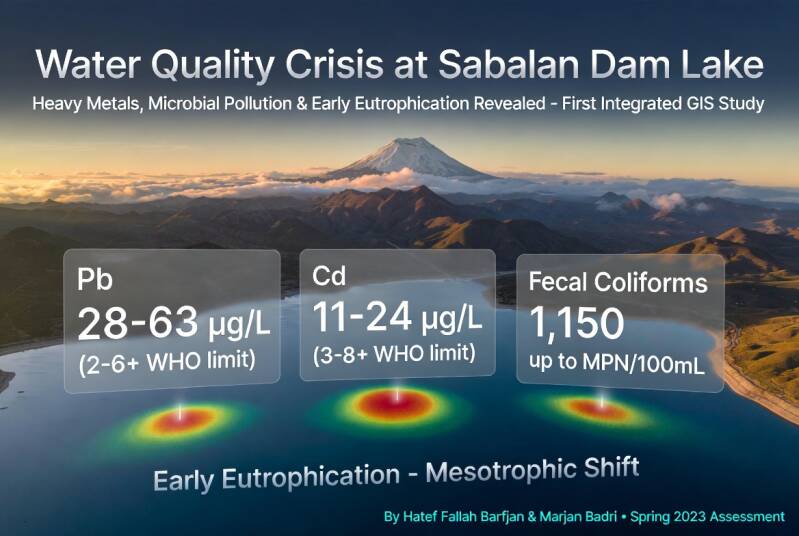
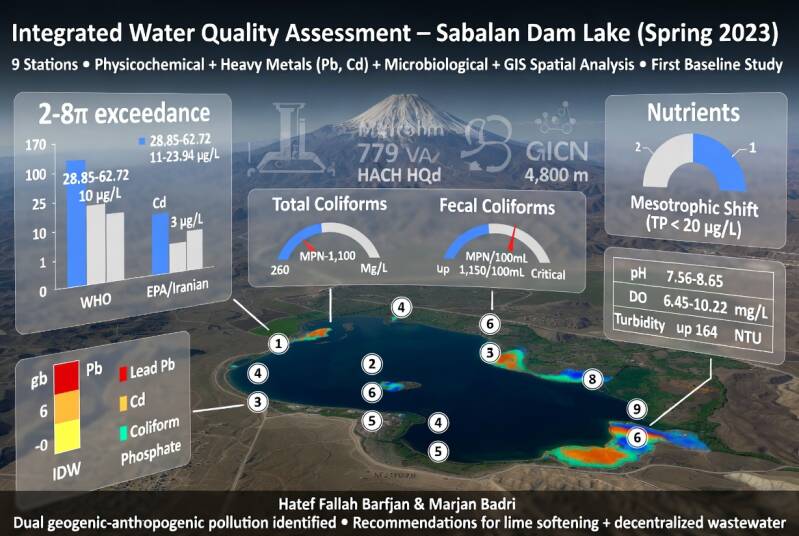
Assessment of Water Quality and Pollution Sources in Sabalan Dam Lake (Iran)

Sustainable Water Management: AI-Driven Modeling for Reservoir Conservation

This research addresses the critical challenge of water scarcity by employing advanced AI models to predict and manage evaporation rates at the Sabalan Dam reservoir.

By integrating machine learning with hydrological data, the study provides a robust framework for optimizing water storage and ensuring long-term resource sustainability in arid and semi-arid regions.
1. ABSTRACT & OBJECTIVES

This study investigates the application of Artificial Intelligence (AI) and Machine Learning (ML) models to accurately predict evaporation rates from the Sabalan Dam reservoir. The primary objective is to develop a high-precision predictive tool that assists in strategic water management, ensuring that reservoir operations are optimized against environmental losses, which is vital for agricultural and potable water security.

2. THE HYDROLOGICAL CHALLENGE

Accurate evaporation estimation is notoriously difficult due to the complex, non-linear interactions between temperature, humidity, wind speed, and solar radiation. Traditional empirical formulas often yield significant errors in specific micro-climates. This research analyzes how these discrepancies can lead to poor water allocation and highlights the need for more adaptive, data-driven modeling in reservoir engineering.

3. METHODOLOGY & AI ARCHITECTURE

The research evaluates multiple AI architectures, including Artificial Neural Networks (ANN) and Support Vector Machines (SVM), trained on long-term meteorological data. By processing variables such as mean temperature and relative humidity, the AI models demonstrate a superior ability to capture the complex dynamics of the hydrologic cycle compared to classical methods, providing a more reliable basis for real-time decision-making.

4. DATA VALIDATION & MODEL PERFORMANCE

The efficacy of the proposed models is validated through rigorous statistical metrics, including R² (Coefficient of Determination) and RMSE (Root Mean Square Error). The AI framework achieved high correlation with observed field data, proving its capability to minimize uncertainty in evaporation forecasting. This precision allows water authorities to manage reservoir levels with enhanced confidence and efficiency.

5. ENVIRONMENTAL IMPACT & SCALABILITY

Beyond the Sabalan Dam, this AI-driven approach offers a scalable blueprint for water resource management in any region facing climate-induced water stress. The study emphasizes that integrating intelligent modeling into infrastructure management is essential for building climate-resilience. This work bridges the gap between environmental science and advanced computational intelligence to protect one of humanity’s most vital resources.

Create Your Own Website With Webador